Browse Items (19 total)
- Collection: September 23: National Gallery of Art (Visual Analysis)
Sort by:
The Feast of the Gods

The Feast of the Gods was created by Giovanni Bellini in 1514 and then later done by Titian in 1529. This painting has a mythological subject matter. This painting is very different from what Bellini mainly produces because it was the end of the…
The Feast of the Gods

In this oil painting, we immediately see a contrast in color and shading between the foreground, which contains Greco-Roman mythological figures, and the background, with the jagged and rough landscape. Immediately, the viewer notices the bright…
Summer

A visual representation of summer as a woman is seen here laying in the grass surrounded by images that makes one think of summer. The woman is thought to be the Roman goddess Ceres, who presided over agriculture and grains. Behind the goddess, there…
Summer

Jacopo Tintoretto was an artist hailing from Venice during the sixteenth century and was the son of a man who dyed silk to make a living. This painting, Summer, is one of three paintings by Tintoretto that are representative of the 3 seasons,…
The Conversion of Saint Paul
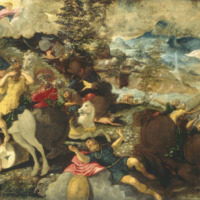
Jacopo Tintoretto is an important leading figure of the Venetian School and the Mannerist style. He studied at Italian painter Titian's studio and had greatly influenced by Titan's use of color.[1] The painting embodied his expressive dramatic…
Allegory of Chastity

The painting of the Allegory of Chastity was originally created as a portrait cover for the bishop of Treviso, Bernardo de' Rossi. At the time, the bishop created a close-knit group of artists that he utilized to create works of art, which included…
Saint John the Evangelist on Patmos
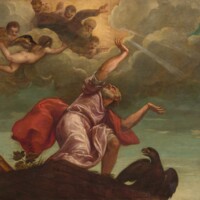
In this painting by Titian, we see Saint John on the peak of a mountain astounded and in awe at the vision of God that appears to him. This occurs following his exile from Rome by Domition in a wave of anti-Christian persecutions [1]. Our sight is…
Saint John the Evangelist on Patmos
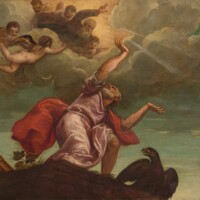
This painting was commissioned to Titian in 1544 for the new albergo (board room). This one of the wealthiest religious confraternities in Venice, stated in the National Gallery of Art article. This painting was one of four original scuole grandi.…
Saint John the Evangelist on Patmos
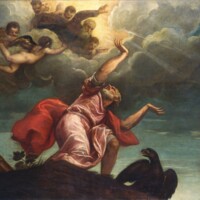
In this painting, we see Saint John the Evangelist on the island of Patmos reacting to the vision and voice of God. Titian highlights the heavenly calling in multiple ways. First, with regards to the composition of the image, although Saint John is…