Browse Items (177 total)
Sort by:
St.Francis in the Desert
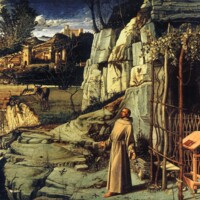
St.Francis stands barefoot at the focal point of this painting adorned in tanish brown Catholic monk robes. His arms are extended out to his sides in a fashion similar to depictions of Christ showing his crucifixion wounds.[2] His head is upturned…
Summer
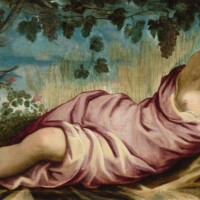
Jacopo Tintoretto was an artist hailing from Venice during the sixteenth century and was the son of a man who dyed silk to make a living. This painting, Summer, is one of three paintings by Tintoretto that are representative of the 3 seasons,…
Summer
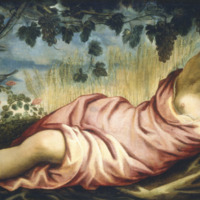
A visual representation of summer as a woman is seen here laying in the grass surrounded by images that makes one think of summer. The woman is thought to be the Roman goddess Ceres, who presided over agriculture and grains. Behind the goddess, there…
The Adoration of the Kings
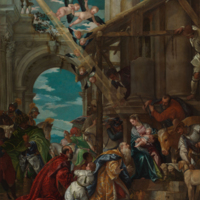
Paolo Veronese was commissioned to paint The Adoration of the Kings by the Church of Saint Silvestro in Venice because the church wanted a painting for the nave of the building [1]. Born in 1528 to a family of stonecutters in Verona, Paolo made a…
The Adoration of the Kings
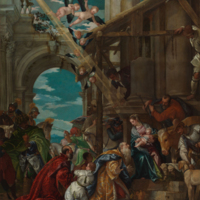
Created by Paolo Veronese c. 1573, The Adoration of the Kings depicts the biblical story of the Three Kings paying a visit to the newborn Christ in the manger. Veronese was born approximately 50 years prior, in 1528, to a small family in Verona,…
The Bacchanal of The Andrians
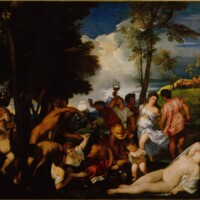
Here we see a group of followers of Bacchus enjoying themselves, drinking from the wine of the new river--a gift from Bacchus. Much like other pieces of his, Titian creates a sense of depth through the landscape; the trees and the green of the…
The Bacchanal of the Andrians
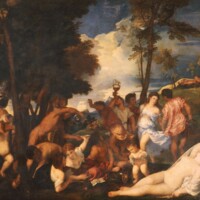
Titian was commissioned to create this painting for Alfonso d’Este. This painting demonstrates the joy brought to the people from wine. Clearly, a wine glass is being held in the center of the painting to demonstrate the immense focus Titian places…
The Choice Between Virtue and Vice Veronese
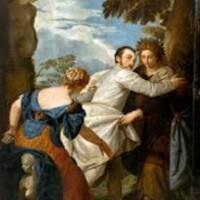
The Choice Between Virtue and Vice Veronese depicts the situation of Hercules in Greek mythology encountering two women and facing a tough choice. Vice shows him a life of comfort, enticing him with the riches of life; yet Virtue summons him to work…
The Family of Darius before Alexander
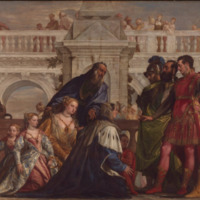
Paolo Veronese’s The Family of Darius before Alexander depicts the family of Darius III pleading for mercy to Alexander. Mistakenly, the king of Persia’s mother addresses not the Greek king but his closest advisor––Hephaestion [1]. Rather than treat…
The Feast of the Gods
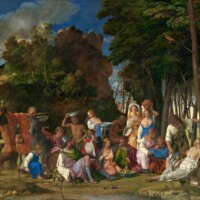
In this oil painting, we immediately see a contrast in color and shading between the foreground, which contains Greco-Roman mythological figures, and the background, with the jagged and rough landscape. Immediately, the viewer notices the bright…