Browse Items (177 total)
Sort by:
Pietro Aretino
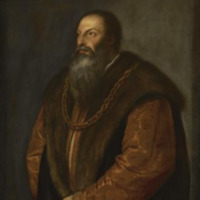
Pietro Aretino was an influential Italian author during the sixteenth century. In addition to his artistic work, however, he was a friend to countless people in power and was nicknamed “the scourge of princes” for his use of blackmail against…
Mars and Venus United by Love
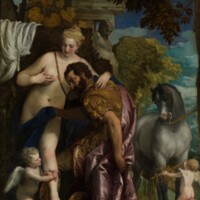
Mars and Venus United by Love was painted by Paolo Veronese (Paolo Caliari) in the 1570s. Veronese was most likely commissioned by Emperor Maximilian II to create this mythological masterpiece. Before the Metropolitan Museum of Art received this…
Pope Paul III with his Grandsons
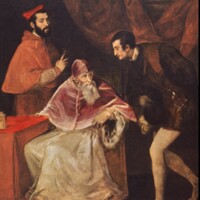
Titian's portrait of the Pope and his grandsons is filled with rich tones of red and maroon along with dark brown, black and skin toned tan accented with white and silver. Seated in the focal point of the painting is Pope Paul III dressed in a white…
Mars and Venus United by Love
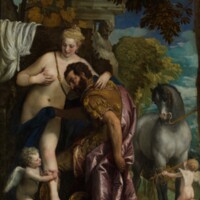
Paolo Veronese was most likely commissioned by Emperor Maximilian II to create a painting of the Roman mythological gods Venus and Mars [1]. Born in Verona (where his name stems from) to a family of artists, Veronese studied the works of those before…
The Golden Age
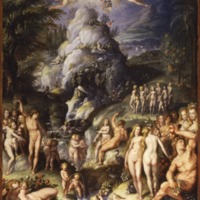
The Golden age is part of a cycle of three paintings in the Uffizi, including the other two representations of the Ages of Silver, and Iron. The cause or context the cycle of Zucchi was commissioned is not known based on the limited historic…
Danaë
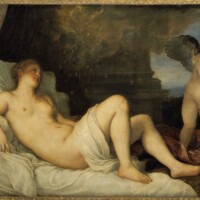
In this painting Titian exhibits his use of colorito, which is when color is used in a dominating manner in the work. The color helps depict the story of the painting, which involves Jupiter seducing Danaë. The story explains how Danaë was locked in…
Pope Paul III and His Grandsons
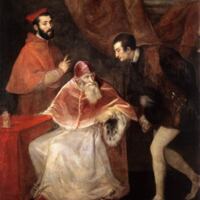
Pope Paul III and His Grandsons is a painting painted by Titian, who was commissioned by the Farnese family. This was one of Titians' finest works Initially looking at this painting you see the three men of different ages. Pope III is sitting in his…
Danaë
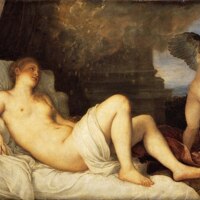
The painting Danaë, by Titian, was made in 1544 and is located in the Capodimonte Museum in Naples, Italy. The painting was made for Cardinal Alessandro Farnese’s bedroom and is representative of his own mistress. The painting was made for the…
The Penitent Magdalene
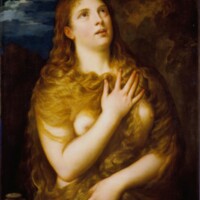
In this painting, we see a penitent Mary Magdalene worshipping the heavens. Titian portrays Mary Magdalene realistically in multiple ways. First, with regards to the composition of the image, Titian places an ointment jar right next to her, providing…
Venus of Urbino
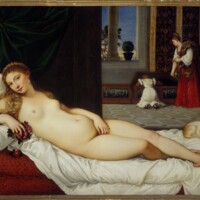
The oil on canvas painting was commissioned for Guidobaldo II, who was designated one year later as the duke of Urbino [1]. Contrary to the description provided by the title, the primary subject matter of the image is a representation of an Italian…