Browse Exhibits (3 total)
Biblical allegories and symbolism in Venetian Art
Venice, a celebrated city known for its exceptional quality of artworks. It was a pious city from the early Renaissance period and Venetians had a strong belief in God. Religious faith in Venice was highlighted through many mediums such as paintings in the churches and decorative productions that emphasized Venetian piety. Furthermore, traces of Venetian history were embedded in those painting as well. Paintings in Venice goes outside the limitation of just blotches of colors, it is a full story on its own.
During the wake of the art Counter-Reformation, many artists start to shift the focus within the painting from mere portraits of holy figures to more of a story or scene. Venetian artists back in the 15th to 17th century will use artistic elements to convey the story of biblical allegories and stories along with symbolism. Most of the time, when an artist adds some abstract elements within the painting, they usually have some meaningful purposes beyond just decorations. Indeed, paintings are different from books, the painter often has to think about how to convey a story and its background history within the painting. Perhaps, sometimes even the most common decorations in the painting may represent other things. If the painting is a biblical allegory, it will most likely to adopt symbolism from the bible [1]. Or a simple facial expression may hint at the theme of the story in the painting. As a matter of fact, this almost demonstrates how carefully each artist has to reflect on the scene within the painting and the amount of attention paid to each detail. As a result, every painting will also require the viewer to examine every detail carefully in order to grasp the message conveyed from the paintings.
[1]Bernhard Ridderbos. "Antonello's 'Saint Jerome in His Study'." The Burlington Magazine 124, no. 952 (1982): 449. http://www.jstor.org/stable/880731.
Power through Religious and Secular Art
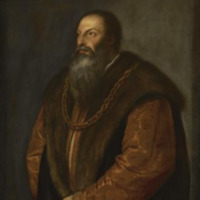
An exhibit exploring Venetian artists' and their patrons use of painting to project power both through religious allegories and secular portraiture.
Women of Venice: Makers, Movers & Shakers