About this Exhibit
Art can be sorted into two categories. The first of these is “art for art’s sake,” or the idea that art is simply for the aesthetic pleasure of the audience. Many artists paint landscapes simply because they think they are pretty. However the latter of the two is much more potent: so called “committed art.” It is crafted carefully to convey a political or social message––a statement by the author or on behalf of the commissioner on a particular matter.
Renaissance Venice was rife with such committed art. During the fifteenth, sixteenth, and seventeenth centuries, it ranked among the wealthiest and most powerful cities in Europe. Although it was peaceful, there were countless groups and individuals vying for control, each aggressively asserting their dominance in whatever way they could [1]. Using the resources that they had––namely the plethora of extremely skilled and world-renowned artists who called the Republic their home––countless Venetians turned to committed art to express their power.
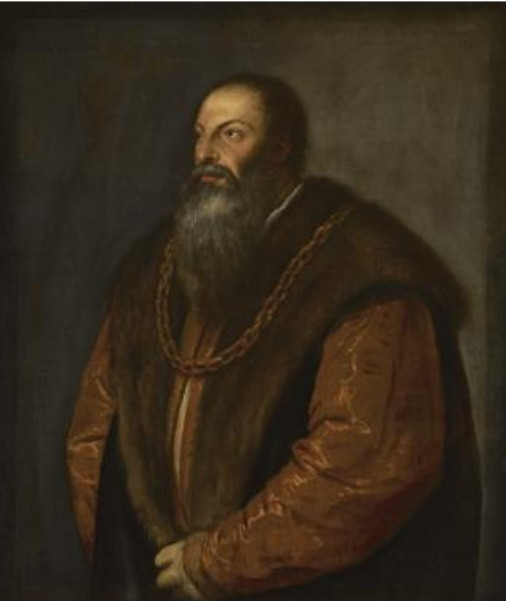
Focusing on painting as a medium, this exhibit will carefully examine several works of art that showcase painters’ efforts to put their patrons’ and sometimes their own superiority on display. Specifically, we will look at two different expressions of this phenomenon. Many feature religious scenes and characters, which commonly draw from both Greco-Roman and Christian mythologies to create implicit associations with divinity or some aspect of it. Another type is through portraiture and secular art, which either allegorically sends a message such as with the religious committed art or directly showcases the patron him or herself. Both are vital to our study of Renaissance Venice, as we are able to analyze the multitudinous ways that Venetians sought power.
As you scroll through the exhibit, you can click on an individual piece to read a more in-depth analysis of it, as well as to see important information concerning it.
[1] John Julius Norwich, A History of Venice (New York: Vintage Books, 1989), 432.