The Evolution of Subjects: From Religion to Mythology
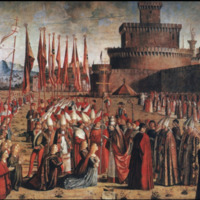
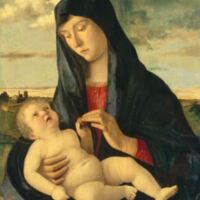
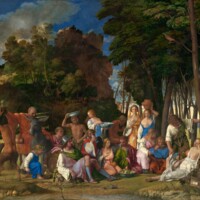
Prior to the sixteenth century, most artistic commissions made were for religious artworks. Giovanni Bellini was the most prominent artist of the fifteenth century, and was comissioned for most pictorial art in Venice. The first work shown in this gallery, The Legend of St. Ursula, depicts St. Ursula meeting the pope. This is clearly a religious work, and was created in 1495 by Carpaccio. It is included as a representation of the types of religious works that were created in the fifteenth century. The second work, Madonna and Child in a Lanscape, was created by Bellini in 1480. It is one of his earlier works, and once again clearly has a religious subject matter of the Virgin and Child. The third work shows the shift that occurred during the centuries, as the third work, originally finished in 1514, is entitled Feast of the Gods. This is Bellini's last large painting, and the shift in subject matter is obvoius. There are many different identifiable mythological figures seen in this work, clearly gods and goddesses. The rest of the exhibit will examine how different subjects and styles arose from the use of mythology as a subject in Venetian art.