Gallery Four: Personal Favorites
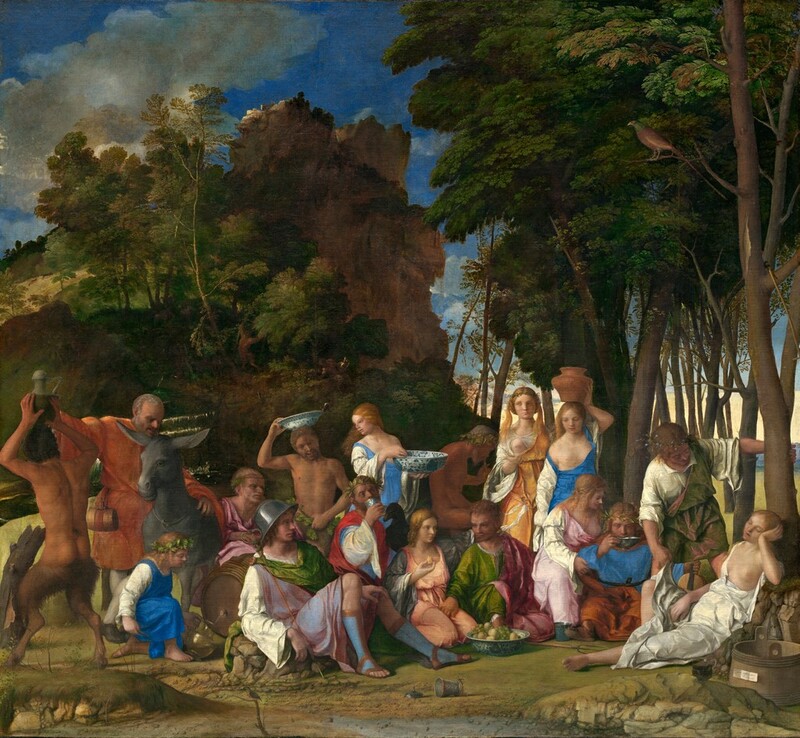
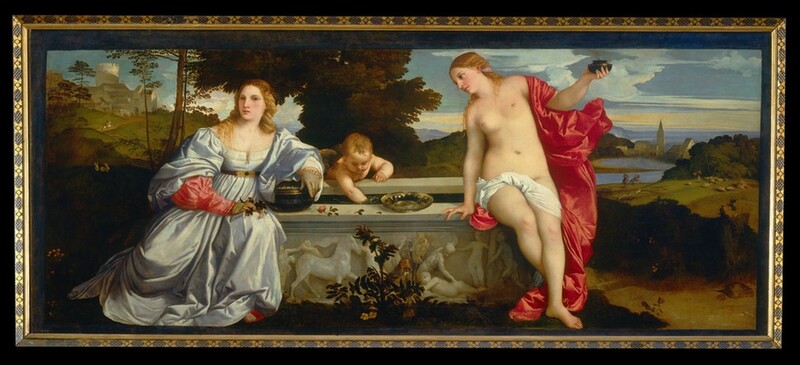
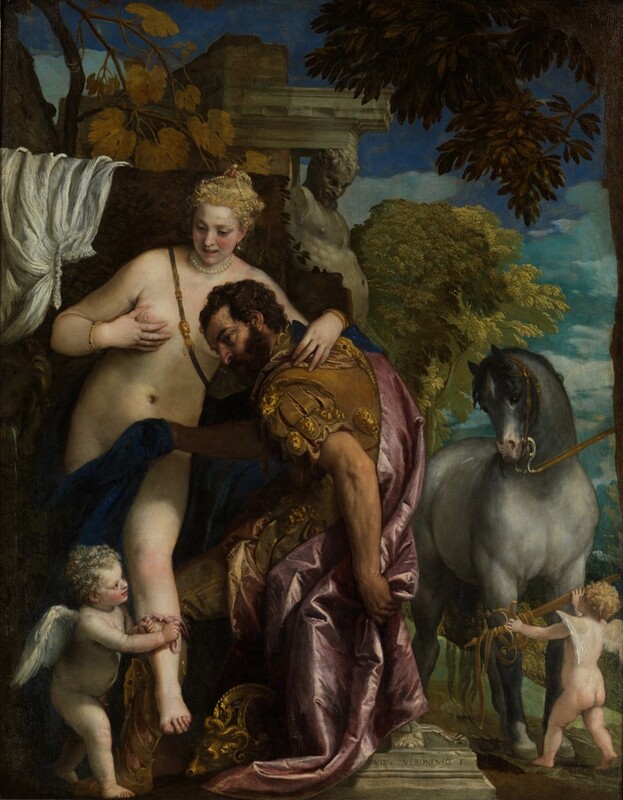
Although these paintings do not correlate with the Roman Catholic religion, they represent mystery, and that is what Greek/Roman mythology and Roman Catholicism have in common. Also, the hidden messages behind these paintings do have Roman Catholicism characteristics. You have to believe in the mystery!
The Feast of the Gods by Giovanni Bellini and Titian represents beauty and that gods and goddesses can be ordinary people too. They are just enjoying a feast as well as messing around like how young children do. In Roman Catholicism, Jesus Christ is a part of God, and he is living his life like a human. Gods can be regular people. The landscape provided in the background is stunning as well as the details and bright colors in each god's/goddess's outfits.
Sacred and Profane Love by Titian pictures two Venuses, one on the left representing profane love and one on the right representing sacred love. It is indeed the same goddess painted twice, showing beauty in both figures. The references to Roman Catholicism are the angel, or in this case, Cupid (Venus's son), and Venus is the "God" or goddess being shown. In this painting, we can see the two belief systems in a Greek/Roman mythology viewpoint and a Roman Catholic viewpoint. Even though the Roman Catholic God is not a man nor woman, you could see Venus as the "God" of the painting since she already is a goddess.
Mars and Venus United by Love by Paolo Veronese show love and respect for each partner. Loving your partner in ways that cannot be explained reminds me of Roman Catholic teaching. You must love your husband or wife, whether you are in an argument or not speaking to one another. I love how beautifully detailed Venus is and all the secret meanings, like Cupid tying a love knot around his parents.
These paintings are displayed from oldest to youngest.