Religious Events and Miracles
The Catholic Church often commissioned works of art that told the stories of miracles or other significant events that occurred in the bible and Venice. The purpose of these paintings was to draw attention to the church, its beliefs, and to celebrate the Catholic ideals and faith.
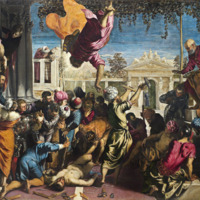
One of the earlier commissions during the Early Modern Period in Venice was The Miracle of the Slave by Tintoretto. This piece shows the self-lessness and piety of saints in the Catholic Church, specifically Saint Mark. It also addresses the suppression of the Catholic faith and how people would be persecuted because of their beliefs during the time of the bible. This painting serves to glorify the Church and its saints through a miracle, while also telling the followers of the faith to not be afraid to practice the faith.
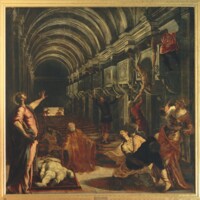
A painting that follows the same saint but celebrates him in a different manner is Finding of the Body of Saint Mark also by Jacopo Tintoretto. This painting is part of a cycle that depicts the recovery of the saint's body in Alexandria and its return to its rightful resting place in Venice. This painting serves to celebrate the city of Venice and its patron saint, while also glorifying the Catholic faith through the painting's depiction of Saint Mark.
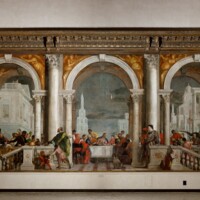
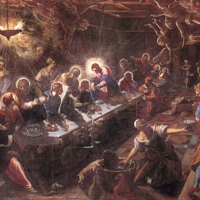
One painting that has been recreated by many artists during the Renaissance period is the Biblical story of the Last Supper with Jesus Christ. Two famous paintings commissioned in Venice during the Early Modern period that were both intended to be Last Supper pieces were The Feast in the House of Levi by Veronese and The Last Supper by Tintoretto. Veronese's piece was unable to be titled "The Last Supper" because the scuola that commissioned this piece determined that there were too many artistic liberties taken by Veronese to consider it a true Last Supper work. Eventually it was determined that instead of repainting the piece, it would be renamed to fit another Biblical story. This grand piece that celebrates the faith through symbolism in architecture and the grandeur banquet that is shown. Tintoretto's painting also alters the traditional painting of The Last Supper by making the table diagonal and placing the dinner in a darkly lit room. This painting served to welcome all people into the Catholic faith by allowing the audience to relate to figures in the painting, no matter the audience's social status.
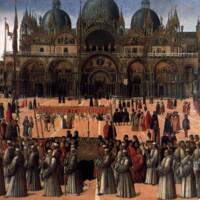
Another painting of a miracle by Gentile Bellini is Procession in St.Mark's Square which celebrates the veneration of the holy cross in Venice, which occurs once a year. The mains story of this painting is about a man who was attending the procession in the Piazza San Marco. He was notified that his son had cracked his skull and was going to die soon. By the time that he returned home his son had fully recovered miraculously, and his recovery has been attributed to the Holy Cross. This painting serves to once again bring power and followers to the faith through a miracle and hope, while also glorifying the city of Venice through its architecture and citizens.