Browse Items (177 total)
Sort by:
Saint Jerome in his Study
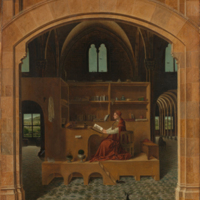
This painting is painted by Antonello da Messina depicting a scene of Saint Jerome in his study space by offering a scope into the saint’s living space as we are looking into a doll’s house. St. Jerome was born in the fourth century, he is known for…
Saint Jerome Reading
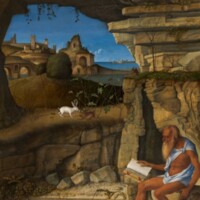
This oil on panel painting was one of Giovanni Bellini’s earlier works. The dating of this painting as 1505, indicated by the inscription in the bottom left corner of the painting, is puzzling to many art historians as the style of this painting was…
Saint John the Evangelist on Patmos
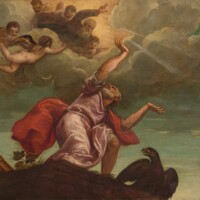
This painting was commissioned to Titian in 1544 for the new albergo (board room). This one of the wealthiest religious confraternities in Venice, stated in the National Gallery of Art article. This painting was one of four original scuole grandi.…
San Carlo alle Quattro Fontane
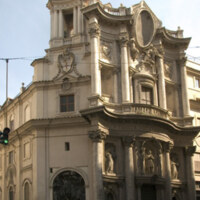
This church was constructed between 1638 and 1641 in Rome, Italy. The architect, Francesco Borromini, is known as the Father of Baroque architecture, with the San Carlo being his first solo work. The site on which the church is built on was cramped…
Scenes from the Life of Saint Ursula: Martyrdom of the Pilgrims and the Funeral of Saint Ursula
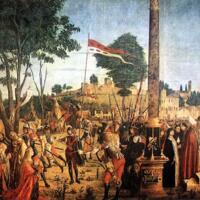
The Martyrdom of the Pilgrims and the Funeral of Saint Ursula was a single painting in a cycle created by the Vittore Carpaccio for the Scuole Piccola [1] and commissioned by the Loredan family [2]. The cycle narrates the life, marriage, and…
St. George and the Dragon
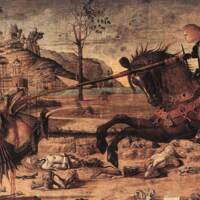
The painting shows the first of the three episodes dedicated to St. George's life: the other two are the Triumph of St. George and the Baptism of the Selenites. The works date to Carpaccio's mature period when he was commissioned by the "Scuola"…