I Desire of Mortals
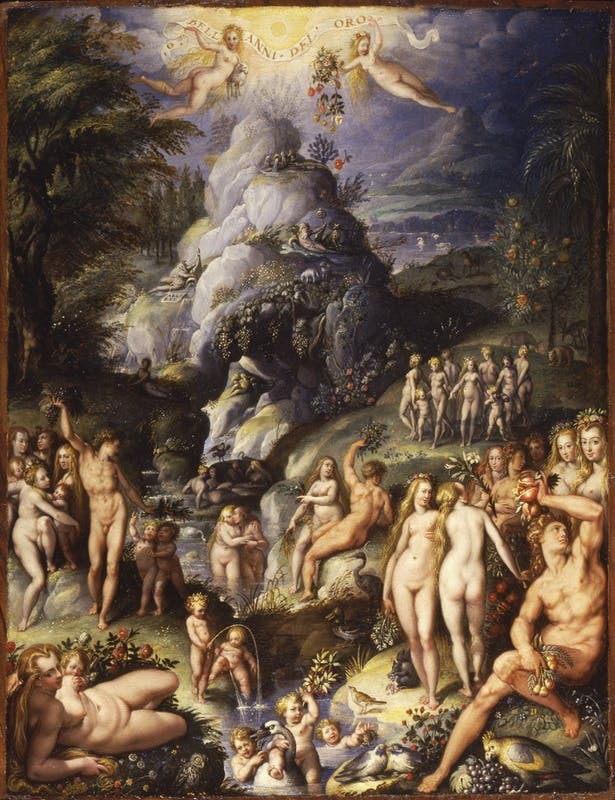
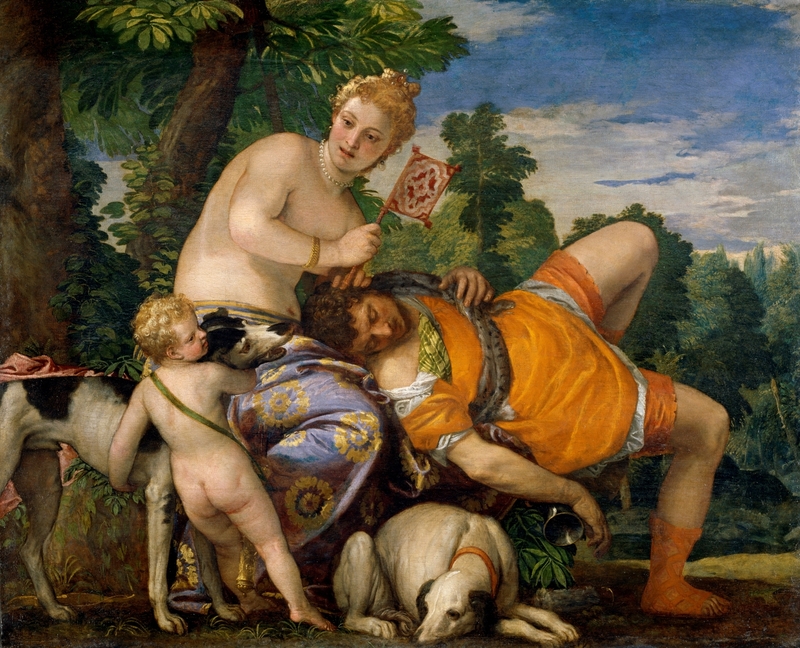
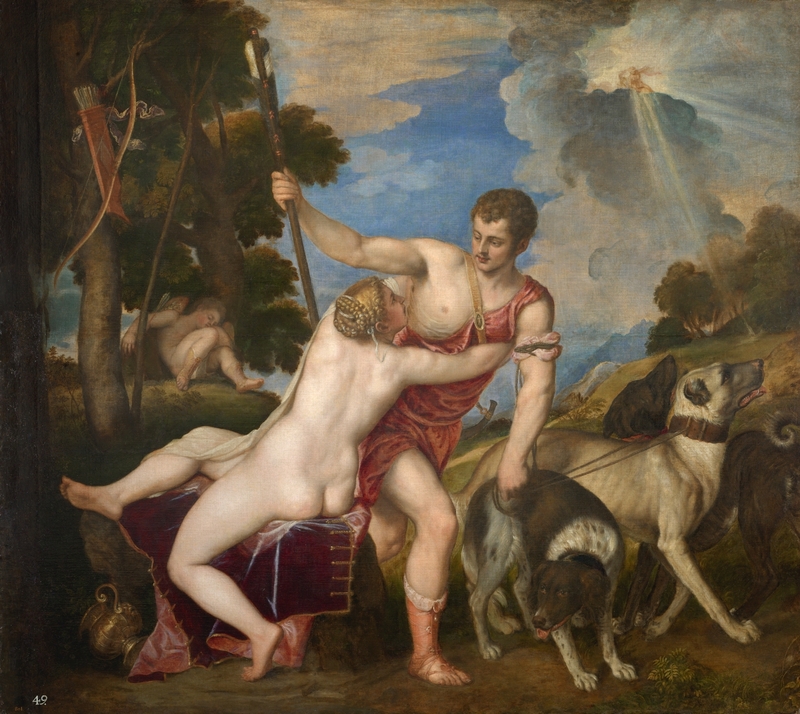
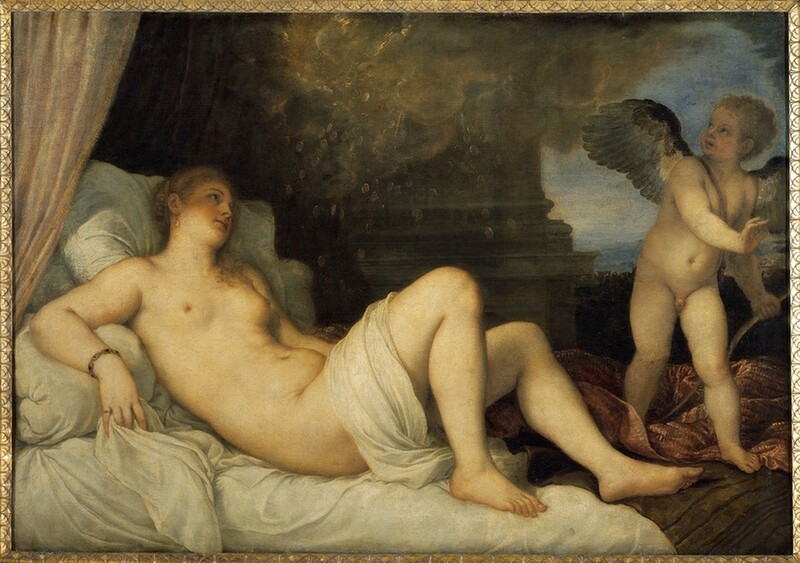
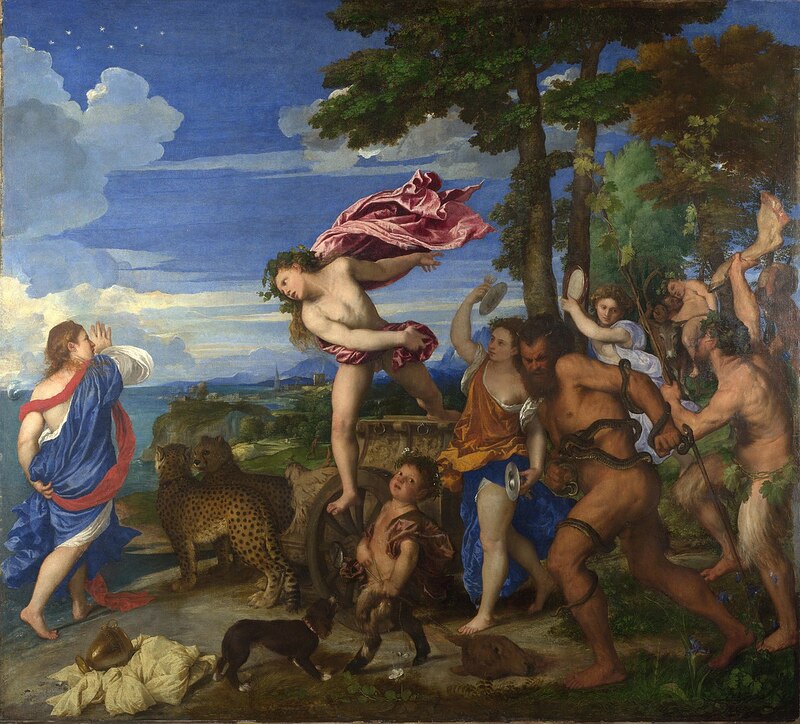
During the Renaissance period, in Venice in the sixteenth century, innovative artists were searching for new ways of expressing new freedom. And humanism and ancient Greek myths provided the way for that, allowing people to understand life and its beauty. Much of the large-scale mythological paintings in the first section of the exhibition were influenced by Ovid's Metamorphosis. The Metamorphosis story is as well-known as the biblical story, and its myths frequently prove to be a source of inspiration for Renaissance artists. The poems of Ovid are a collection of mythological tales based on the theme of transition. In Greek, 'metamorphoses' means 'transformation‘.[1]
In this section, the desires of gods and mortals in classical mythology for love, happiness, peace, etc. are praised and yearned. The artists not only have their own understanding of myths and the Metamorphosis but also combine the talents of artists and storytellers to choose the most infectious and important moments in the plot.
Take Titian as an example. Titian used the phrase 'poesie’ for the paintings in his collection of 'poesie’ pieces for Prince Philip because he considered them to be artistic equivalents to poems. These series of paintings, with vivid colors and appealing scenery, describe human characteristics and diverse impulses that capture the audience's sentiments and imagination. Sensory is the strength of the series. They are not only for our sensory perception but also for our sense of touch, scent, and sound as well.[2]
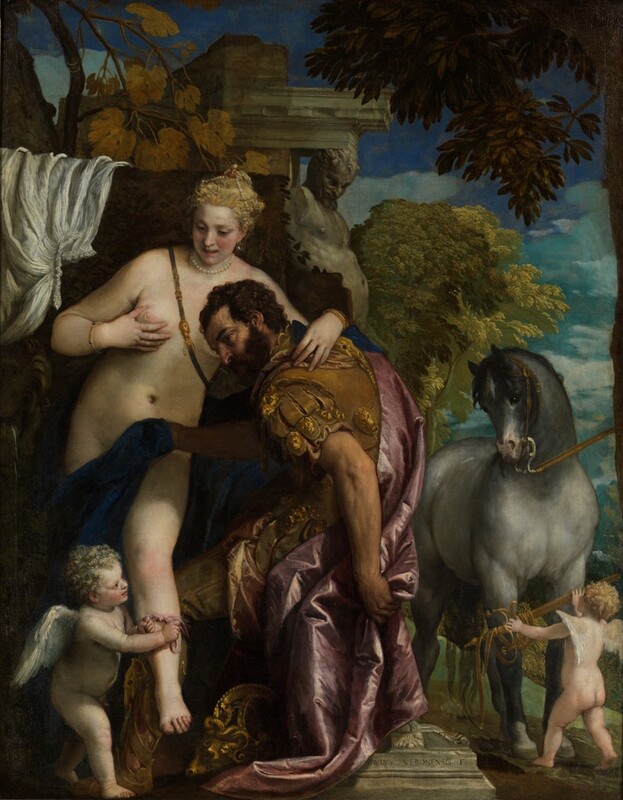
Although in this part, the desires of gods and mortals are often romantic, delightful, and full of hope, the emotions contained in them are not all fairy-tale joy and satisfaction. Art patrons and artists often have a moral or metaphorical purpose in their choice of the subject matter. In Mars and Venus United by Love, the primary focus of the artwork is unity through affection and marriage. The art, however, does not merely depict the marriage theme but characterizing marriage as a principle focused on sacrifice, power, reproduction, and clarity. It is believed that for the love of Venus, symbolized by the behavior of the second putti, as well as the rope to which Mars' horse stays tied, Mars disregards his aggression. We see the notion of sacrifice here.[3] These classical mythological stories use different expression techniques and prominent features as media to emphasize and endow moral and social implications to the story.
In the painting the Golden Age by Jacopo Zucchi, the artist described the golden age as an ideal time for mankind to be full of happiness and peace in the everlasting spring. Evil and punishment are not defined or existed. [4] People enjoy the food and prosperity provided by nature. The art in this part extols the goodness of mankind and the virtues of people and expresses people's desire for love, happiness, and peace.
[1] Gildenhard, Ingo, and Andrew Zissos. "The Metamorphoses: A Literary Monstrum." In Ovid, Metamorphoses, 3.511-733: Latin Text with Introduction, Commentary, Glossary of Terms, Vocabulary Aid and Study Questions, 13. Cambridge, UK: Open Book Publishers, 2016. http://www.jstor.org/stable/j.ctt1fzhh5b.7.
[2]“Titian’s ‘Poesie’: The Commission | Titian: Love Desire Death | National Gallery, London.” Accessed November 11, 2020. https://www.nationalgallery.org.uk/exhibitions/titian-love-desire-death/titian-s-poesie-the-commission.
[3] BELSEY, CATHERINE. "The Myth of Venus in Early Modern Culture." English Literary Renaissance 42, no. 2 (2012): 179-202. Accessed November 9, 2020. http://www.jstor.org/stable/43607524.
[4]Thomas Puttfarken, “Golden Age and Justice in Sixteenth-Century Florentine Political Thought and Imagery: Observations on Three Pictures by Jacopo Zucchi.” Journal of the Warburg and Courtauld Institutes 43 (1980): 130.