Gallery Three: Religion and Power
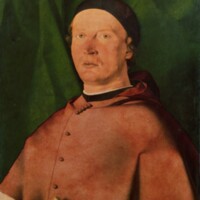
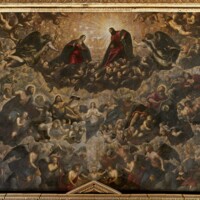
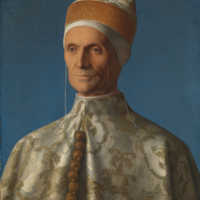
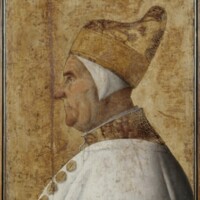
Leading religious and government officials often commissioned work that underscored their importance and place in Venice. They wanted to be portrayed as powerful and ideal leaders, supported by divine sanction. As Margaret Morse writes, these portraits served as a way for top officials to reinforce their righteousness and connection to God [1]. Artists were tasked with conveying the leaders of Venice as influential role models that are supported by God himself. This connection between Venice and the heavenly realm highlights the "myth" of the city, promoting the idea of Venice as a superior force.
[1] Margaret A Morse, "Domestic Portraiture in Early Modern Venice: Devotion to Family and Faith," in Domestic Devotions in Early Modern Italy (LEIDEN; BOSTON: Brill, 2019): 118