Gallery Two: Women as Movers
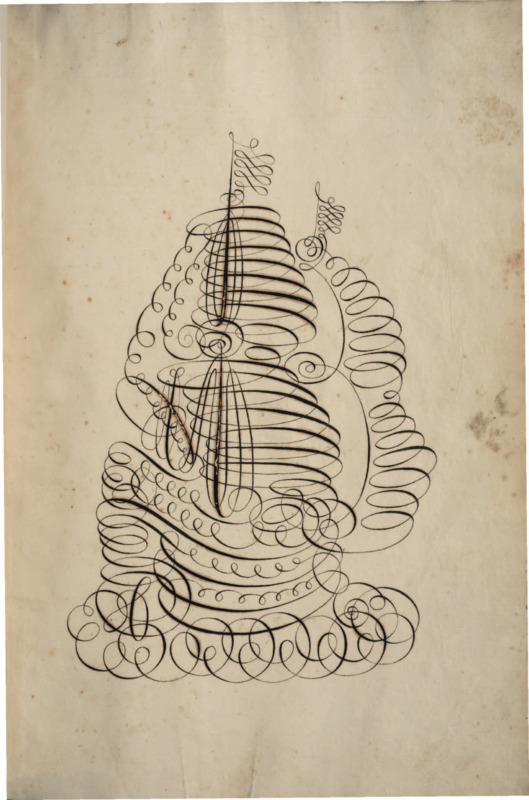
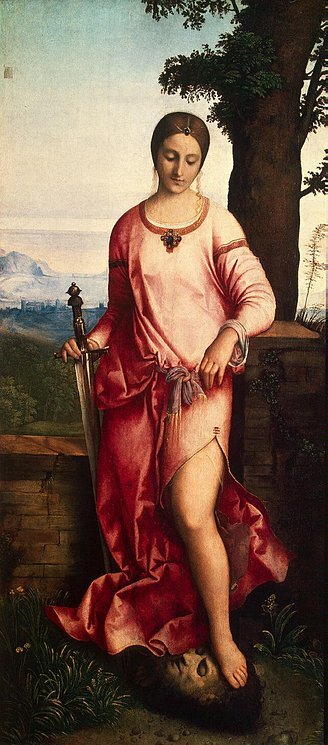
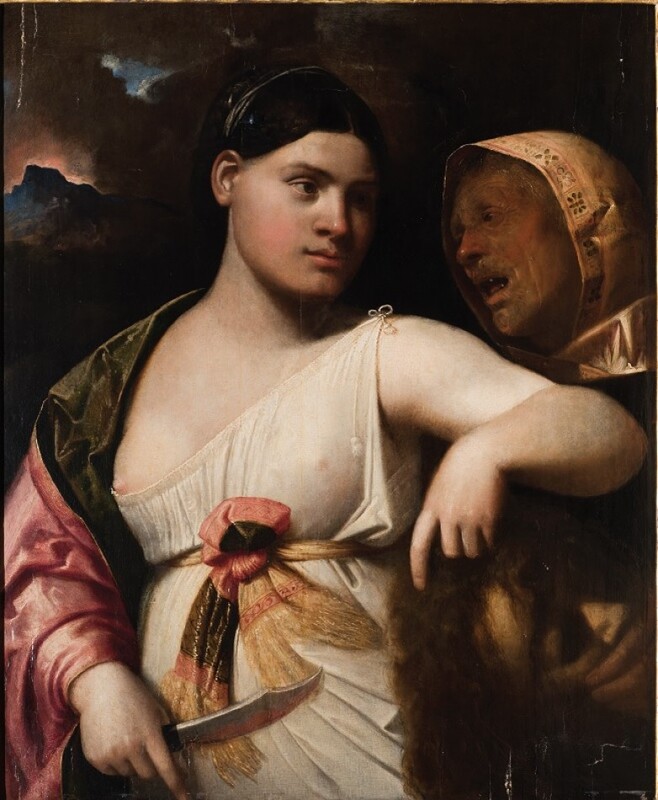
Though women's roles in the Italian Renaissance have often been understood as revolving around the domestic setting, not all women were confined to the home. Some traveled great distances, migrating as itinerant artists and poets, relocating through marriage, or journeying to new lands as stateswomen. Even the figure of Judith - sometimes used as an example of domestic virtue - bravely left the peace and safety of her homeland in order to save it. This motion is also displayed in women's activities and their growing understanding of the world. Scholars such as Bronwen Wilson and Blake de Maria have shown that the visual culture of early modern Venice was deeply influenced by contacts with the broader world through trade, and women were embedded within these developing networks. Giovanna Garzoni, for example, depicts a galleon at sea in her Venetian calligraphy book - this exercise represents her exposure to Netherlandish art, awareness of travel technology, and perhaps even her personal experience with travel by ship as she moved among Ascoli Piceno, Venice, Florence, Rome, Naples, Torino, Paris, and London.