Alternative Depictions of Women
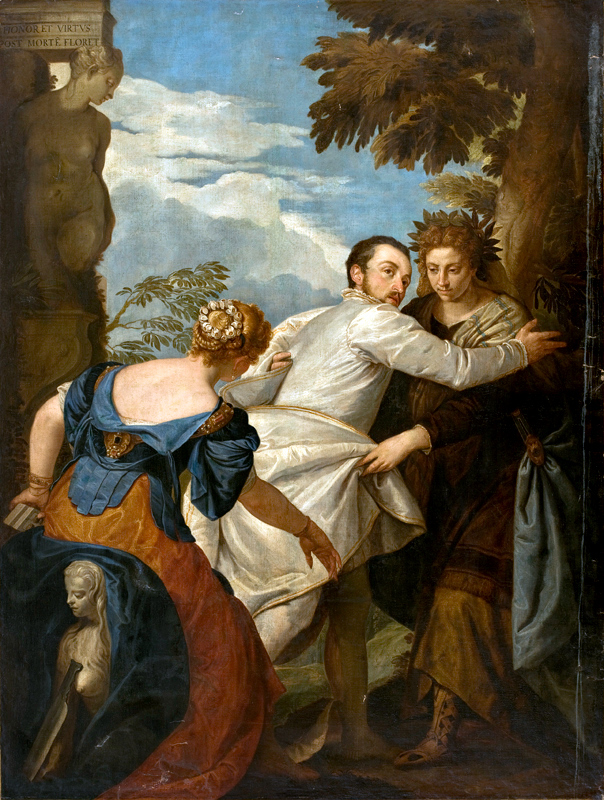
Though numerous tropes of women as divine protectors existed within Venice, there were also many depictions of women that fit the role of protector but were not divine. One such depiction is the trend of female personification of certain qualities. The Choice between Virtue and Vice by Paolo Veronese is one such piece because it uses women as a representation of the qualities of virtue and vice. When looking at the spatial organization of this piece, though Virtue is depicted in a haggard manner, she is standing protectively over Hercules after he chose her over the figure of vice. Though she is not a divine figure, she was still a protector. This depiction is similar to the ways in which female personifications of Justice could be seen throughout the city, especially in or near government buildings. She is often represented with inscriptions that state that she will punish or reward according to merit. This establishes her as a protective figure with power, however, not one that is inherently divine. [1]
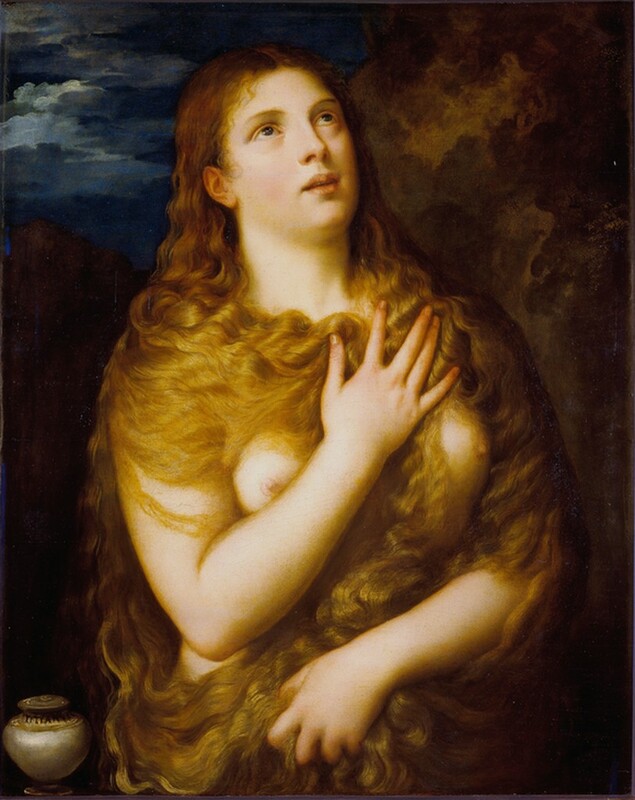
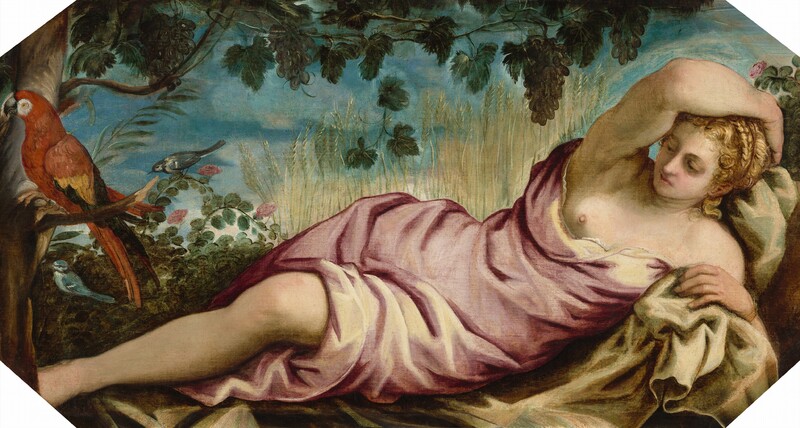
On the other end of the spectrum, there were also depictions of women that are considered divine; however, they are not in the role of protector. Mary Magdalene in The Penitent Magdalene by Titian is depicted in a manner that is far from that of a protector. In fact, this divine figure has been depicted in an erotic and passive manner, as seen with Mary Magdalene’s upward gaze and nude depiction. This idea was also seen in mythology, such as in Summer by Tintoretto, which depicts the goddess Ceres lying semi-nude in a field. The lush background as well as her relaxed pose points towards the idea that she, though divine, is not depicted in the role of protector.


Women were also depicted as non-divine and not as protectors. These mortal women were often noblewomen, such as the case with Caterina Cornaro in Portrait of Caterina Cornaro as Saint Catherine of Alexandria. Her lavish clothing as well as her calm, regal stance, points to her as a woman of power and status, though she may not necessarily be divine or a protector. Another instance of depictions of mortal women is the figure on the left side in Titian’s Sacred and Profane Love. Her portrayal in this marriage portrait highlights the role mortal women played in Early Modern Venice as mothers and children. This further illustrates that the manner in which most women were recognized in Venice was through the lens of marriage.
Though women were depicted as divine protectors, both biblically as well as through mythology, there were still numerous depictions of them that did not fit this category or reminded viewers of the role that women played in Venetian society. Nevertheless, regardless of the manner in which women were depicted, they still played a vital role in Venetian society and were integral in Venice's ability to perpetuate their most valued ideal of La Serenissima.
[1] David Rosand, Myths of Venice: The Figurations of a State (Chapel Hill: University of North Carolina Press, 2001), 20.