Building a Myth upon the Traditions of the Classics
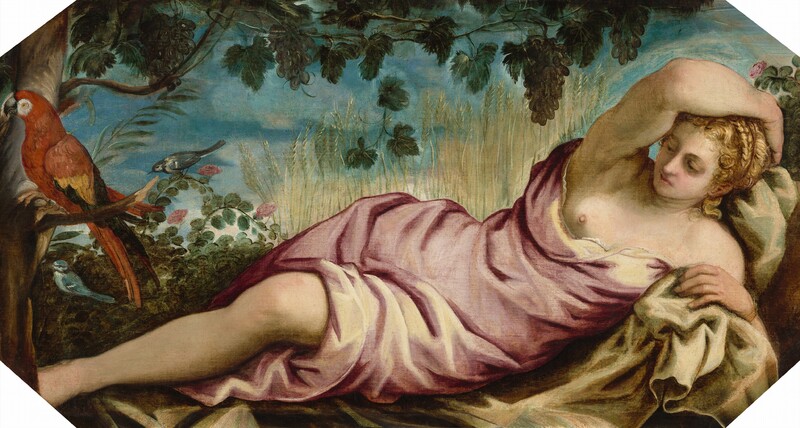
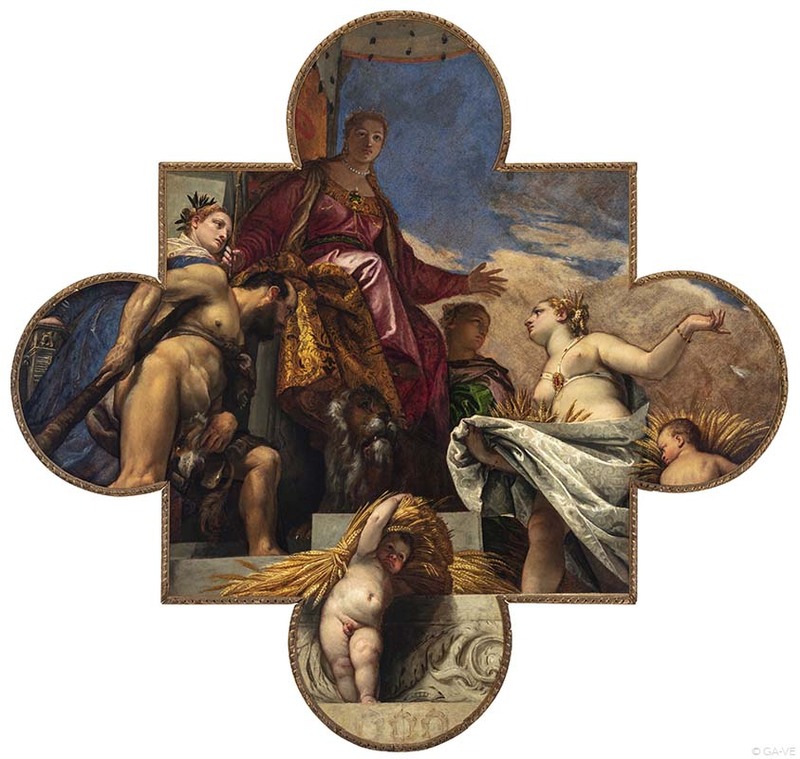
A focal point of trade and exchange in the Early Modern world, Venice was known for its unique identity as a city on the water.¹ While Venice claimed to be an egalitarian state, in reality, it was very much divided by wealth into many classes. Yet, Venice was able to display a different truth by inflating its myth by using mythological subject matter, depicting Venice as a state governed by honorable ideals and righteous people. Connecting attributes of mythological figures to various representations of Venice--most notably the conflation of Venice-Justice, La Serenissima claimed to be the heir to the throne of the Romans and the Greeks, and as such, it also accepted the responsibility to guide humanity. This claim by the Venetians of the Renaissance period proved to be a driving force in their self-promotion, locally and abroad. Notably, Veronese’s Venice Receiving Homage from Hercules and Ceres--influenced by Greek philosophers²--exquisitely depicts this process as the figure of Venice is crowned by Hercules and Ceres, a movement that represents the metaphorical “passing of the baton.”
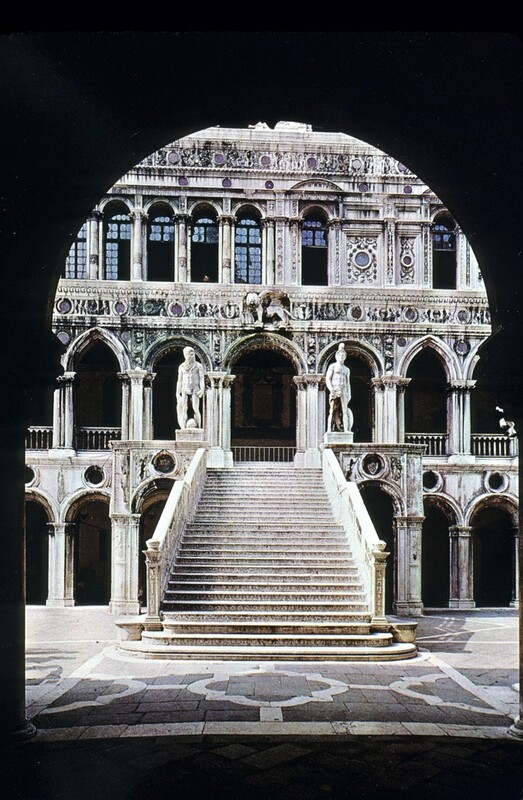
In addition, we see the attributes of the gods being linked to Venice: Ceres (the goddess of fertility) stands in front of wheat--indicating Venice’s role as a center of trade, and Hercules, known for his wisdom and strength, indicates the militaristic strength of Venice. This concept of association is constantly repeated in many works, such as Tintoretto’s painting, Summer, and Rizzo’s architecture, Scala dei Giganti. Imagery within these artworks display qualities of mythological figures that are likened to Venice: Ceres in Summer is depicted erotically and is surrounded by exotic birds, implying the beauty and exotic nature (from trade) of Venice. The two sculptures of Neptune and Mars of the Scala dei Giganti also fortify this myth: the power of both gods is likened to the lion of St. Mark, the patron saint of Venice.
- Daniel Savoy, “Water as Urban Space,” in Venice from the Water (New Haven: Yale University Press, 2012), pp. 1-15.
- John Garton. “Paolo Veronese’s Art of Business: Painting, Investment, and the Studio as Social Nexus.” Renaissance Quarterly 65, no. 3 (Fall 2012): 753–808. doi:10.1086/668301.