Gallery 2: Celebration of Venetian Government and Society
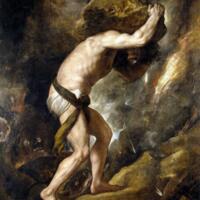
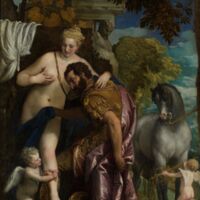
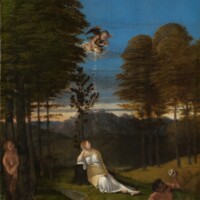
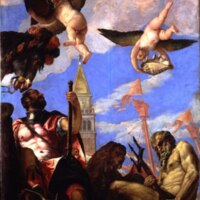
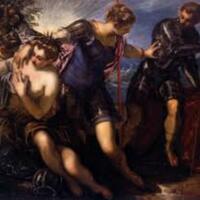
As we have explored certain stylistic measures and techniques that influential artists used to tell mythological allegories, we may now understand precisely how these methods were used in conjunction with the promotion of Venetian society. The paintings in this gallery encompass aspects that the Venetian government wanted to promote about their unique city – protection by the divine, punishment for sins, separation between vice and virtue, and ideal marriage and love [1]. The characters in these paintings are traditional mythological figures, but are presented in a way that blend their stories with the strengths of the Venetian nation.
While we already examined Tintoretto’s use of style in Minerva Sending Away from Peace and Prosperity, this is a crucial painting to understand exactly how Venetians viewed their government and structure of society – a holy city under the protection of a divine figure. Veronese’s Mars and Neptune builds on Tintoretto’s message, highlighting a nation of prosperity and divine management. In a different tone, Titian’s Sisyphus builds upon the traditional myth to demonstrate eternal punishment in the underworld for anyone who misleads the gods and sins deeply, emphasizing the Venetian characteristic of justice and morality [2]. Similarly, Lotto uses the Allegory of Chastity to personify the moral struggle between virtue and vice, promoting the ideals of innocence and purity over the temptation to sin. To encompass all these values into one ideal situation, Veronese’s Mars and Venus United by Love can be interpreted as a story of true love and quintessential marriage. All these artists expand upon the original myth and interactions of the figures to create an image that bolsters Venice’s accomplished and successful governance.
[1] David Rosand, Myths of Venice: The Figurations of a State (Chapel Hill: University of North Carolina Press, 2001), 14.
[2] Maria Loh, “Abracadabra.” In Titian's Touch: Art, Magic, and Philosophy, 56–59.