Gallery Two: Emphasis on Individual Interpretation
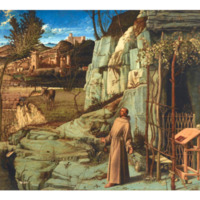
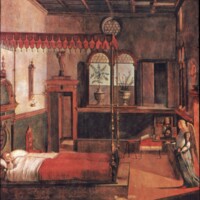
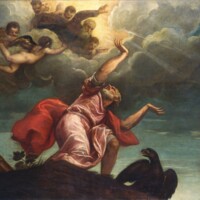

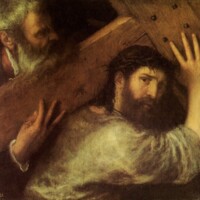
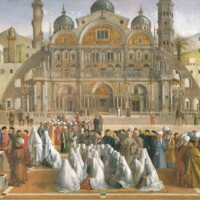
Rather than separating the viewer from religious artwork, artists in early modern Venice used a variety of techniques from crafting intimate sightlines of central figures to incorporating thought-provoking common symbols to including characteristics of the intended audience in the painting to draw viewers in and have them have a unique experience with the piece of art. This idea of incorporating the viewer's experience into the production of artwork heavily stems from the humanistic idea of each human being having the power and wisdom to interpret their observations for themselves and also comes as a recognition of the Protestant shift to individual interpretation of scripture. While the Council of Trent rejected this idea of sola scriptura, this idea of taking the viewer's individual experience into account when crafting a painting blossomed in early modern Venice, making religious artwork more connected to the viewer and provoking contemplation of the religious idea espoused in the painting within the viewer [1]. This selective incoporation of the guidelines set forth for religious art by the Council of Trent in Venetian Renaissance art is indicative of Venice's unique social structure due to its wealth and ability to not have to rely on the Catholic Church [2]. This unique separation of Church and state at the time led to friction between artists and the Catholic church. This friction also revealed itself in the interactions between the city-state and the church, resulting in its ex-communication in 1606 [3].
Consider here how the techniques used here enhance your connection with the artwork and how this idea of connection with the audience has evolved over time and plays into religious trends in early modern Venice. For example, in Christ Carrying the Cross by Titian, he depicted Christ as looking directly into the viewer's eye with a close, intimate perspective, instilling relatability and transporting the viewer to the scene, which demonstrates the incoportation Council of Trent's guideline to enhance the ordinary person's connection with religious art.
[1] "Council Of Trent | Definition, Summary, Significance, Results, & Facts". 2020. Encyclopedia Britannica. https://www.britannica.com/event/Council-of-Trent.
[2] Rich and Poor In Renaissance Venice: the Social Institutions of a Catholic State, to 1620. Oxford: Blackwell, 1971. https://hdl.handle.net/2027/heb.00039. EPUB.
[3] Buckley, Jonathan, and Charles Hebbert. 2010. Venice & The Veneto. London: Rough Guides.