Gallery Three: Artistic Variability
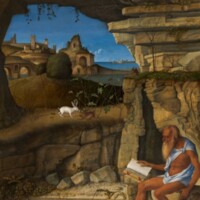
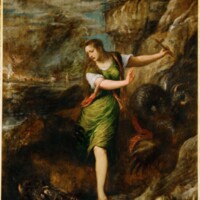
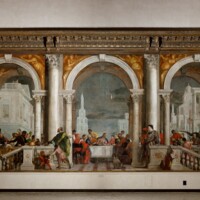
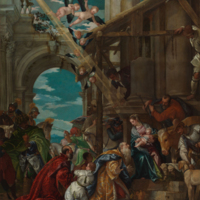
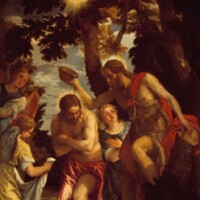
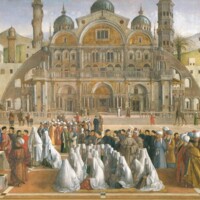
While the Counter-Reformation tried to heavily regulate the type of art painters could put out through the rigid guidelines set in place by the Council of Trent, many artists still managed to include their own personal styles and interpretations of these religious scenes into their artwork. This is yet another example of artistic trends in religious art running counter to the ideas espoused by the Counter-Reformation and the Council of Trent. However, the ability of these Venetian artists to evolve and differentiate themselves from others made them unique as Venice was less under the thumb of the papacy as compared to other city-states [1]. These artists would put their own unique spin on religious scenes and narratives through the use of differing versions of the story, the inclusion of extra details, and emphasis on different aspects of the scene, not only differentiating their work from other versions of the same scene by other artists but also previous iterations created by themselves. The evolution of an artists' work embodies the humanistic idea of humankind's ability to innovate. In addition, his idea of individual artistic interpretations also stems from the idea of humans having the knowledge to infer meaning for themselves and the idea of sola scriptura, which was rejected by the Council of Trent, demonstrating Venetian artists' subversion of the Catholic Church's rules [2]. Jutta Sperling argues that Venice's monachization of women and shift from representations of Venus to ones of the Virgin Mary demonstrate Venice's belief in its ability to be pure and impenetrable to corrupting external influences, which explains why artists in Renaissance believed they were able to defy the orders of the Catholic Church in the Council of Trent [3].
Consider here how the techniques used in these paintings differentiate artists from each other and their previous work and intersects with the ideas being espoused by the Council of Trent. For example, in The Adoration of the Kings, Veronese strayed from traditional interpretation of this scene by including various animals and hay in the manger, which added a more realistic quality to the scene, exemplifying the Council of Trent's request to make the work more applicable to ordinary people while also defying the order to portray traditional versions of important Biblical scenes.
[1] Rich and Poor In Renaissance Venice: the Social Institutions of a Catholic State, to 1620. Oxford: Blackwell, 1971. https://hdl.handle.net/2027/heb.00039. EPUB.
[2] "Council Of Trent | Definition, Summary, Significance, Results, & Facts". 2020. Encyclopedia Britannica. https://www.britannica.com/event/Council-of-Trent.
[3] Kate Lowe, Jutta Gisela Sperling. Convents and the Body Politic in Late Renaissance Venice. (Women in Culture and Society.) Chicago: University of Chicago Press. 1999. Pp. xxi, 417. $45.00, The American Historical Review, Volume 107, Issue 1, February 2002, Pages 303–304, https://doi.org/10.1086/ahr/107.1.303